
DOJ, through the DOJ-RSPPU, participated in the 76th Session of the UNHCR Executive Committee
Feb 10, 2026
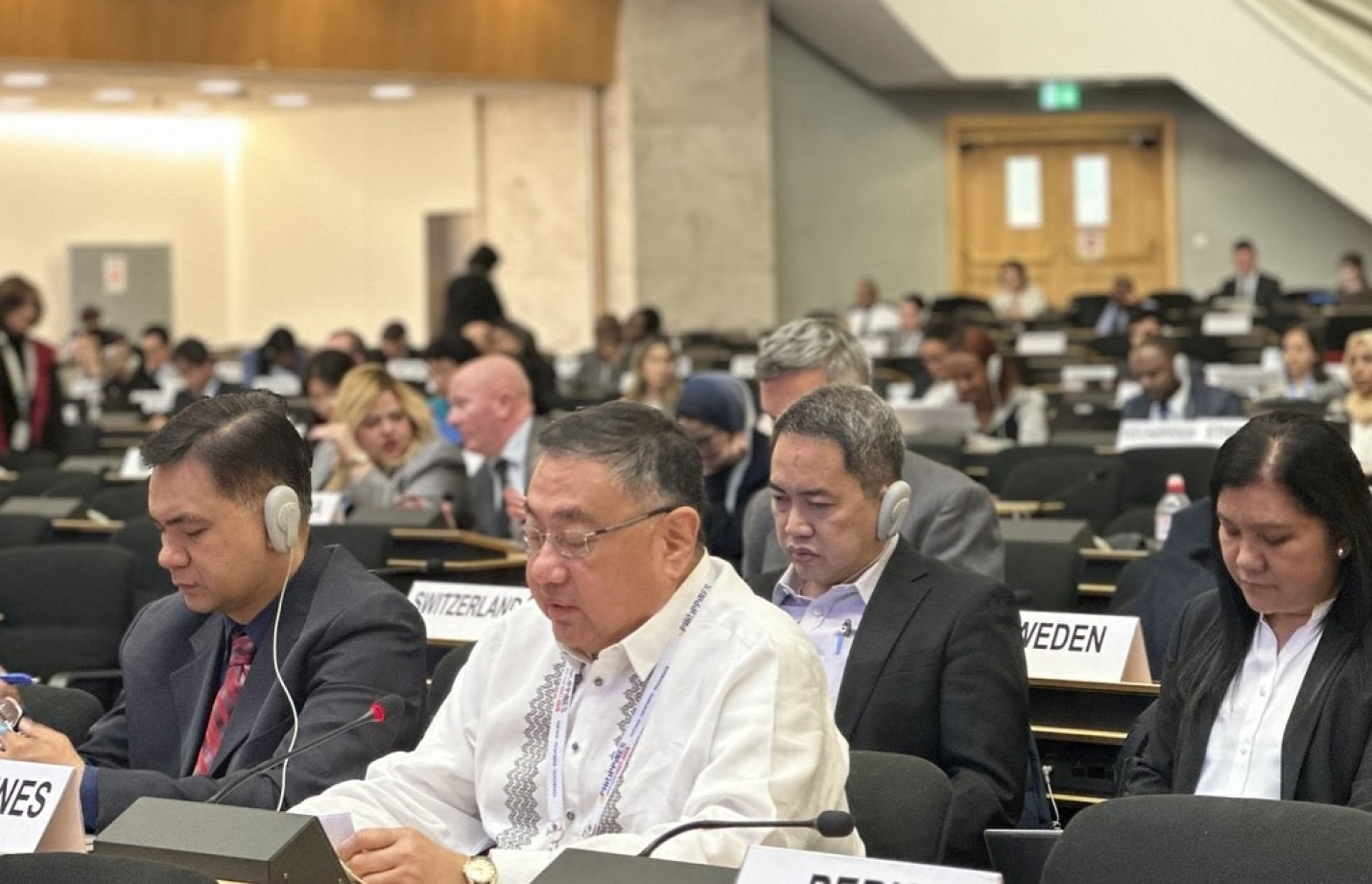
The Department of Justice, through the Refugees and Stateless Persons Protection Unit (DOJ-RSPPU), has participated, as members of the Philippine Delegation, in the 76th Session of the United Nations High Commissioner for Refugees (UNHCR) Executive Committee (ExCom), including bilateral meetings and the Side Event on “Growing Membership, Strengthening Resolve: One Year of the Global Alliance to End Statelessness”, held at the Palais des Nations, Geneva, Switzerland from 06 to 10 October 2025.
The Philippine Delegation was headed by Ambassador Carlos D. Sorreta, Permanent Representative of the Philippines to the United Nations Office and other International Organizations in Geneva. Members of the Philippine Delegation include Atty. Andrea B. Leycano, First Secretary of the Philippine Mission in Geneva, State Counsel IV and Assistant Head of DOJ-RSPPU Paulito C. De Jesus, State Counsel IV Rosalie R. Cumla, State Counsel IV Melvin C. Suarez, and Attaché Morice Jann E. Briones also of the Philippine Mission.
The ExCom meets annually to review and approve the agency’s programmes and budget, advice on international protection and discuss a range of other issues with UNHCR, intergovernmental, and non-governmental partners.
Ambassador Sorreta delivered the National Statement of the Philippines during the General Debate, wherein he expressed, among others, that the Philippines actively supports UNHCR’s mandate, particularly in protecting and finding solutions for refugees, stateless persons, and other persons of concern. He shared that the Philippines have strengthened access to health, education, and legal identity for refugees and stateless persons, while advancing naturalization and birth registration as durable solutions. He mentioned the Philippines' Complementary Pathways (CPath) Programme, Pathways Pilipinas, which provides tertiary education opportunities to refugees, including from the Rohingya community.
Further, as this year's co-chair of the Global Alliance to End Statelessness Advisory Committee, Ambassador Sorreta reaffirmed that addressing statelessness must remain on the agenda. The Philippines stands ready to advance discussion on statelessness at the regional level, being the only country in Southeast Asia to have acceded to both the 1954 Convention Relating to the Status of Stateless Persons and the 1961 Convention on the Reduction of Statelessness (Statelessness Conventions).
State Counsel IV and Assistant Head of DOJ-RSPPU De Jesus made an intervention during the consideration of the agenda item on International Protection wherein he highlighted, among others, that the Philippines is reviewing the delivery of its Global Refugee Forum pledges, including asylum system modernization, inclusion in national services, and complementary pathways programme. He also mentioned that at the global level, the Philippines will continue to push for concrete solutions as co-chair of the Advisory Board of the Global Alliance to End Statelessness and as a Solution Seeker state.
The Philippines is a State Party to the 1951 Convention Relating to the Status of Refugees (1951 Refugee Convention) and its 1967 Protocol, as well as the above-mentioned Statelessness Conventions. As such, the Philippines is under legal obligation to comply in good faith with all the provisions of the said Conventions and other relevant international instruments to which the Philippines is a State Party to.